
Garage workshop lighting is one of the most overlooked upgrades for any DIY workspace, but getting it right can save you time, reduce eye strain, and even help you avoid costly mistakes or accidents. Whether you’re wrenching on a car or building furniture, your lighting situation can make or break project outcomes.
Key Takeaways
- LEDs now dominate new garage lighting installations, offering major energy and maintenance savings over traditional bulbs.
- Many DIYers overlook layout and color quality, leading to shadows and eye fatigue even after an LED upgrade.
- Initial LED investment is higher, but payback is typically fast due to electricity savings and long bulb life.
- What Is Garage Workshop Lighting and Why Does It Matter?
- How to Upgrade Your Garage Workshop Lighting: A Step-by-Step Guide
- Analysis, Problems & Common Pitfalls
- Conclusion
- FAQ
What Is Garage Workshop Lighting and Why Does It Matter?
Garage workshop lighting means more than just screwing in the brightest bulb you can find. The right setup transforms a dim, shadowy garage into a productive, safe workshop. Proper illumination cuts down on mistakes, highlights details, and reduces tripping hazards. With the sharp rise of LED technology, homeowners now have efficient, long-lasting options that go far beyond old school fluorescents or single-bulb solutions.
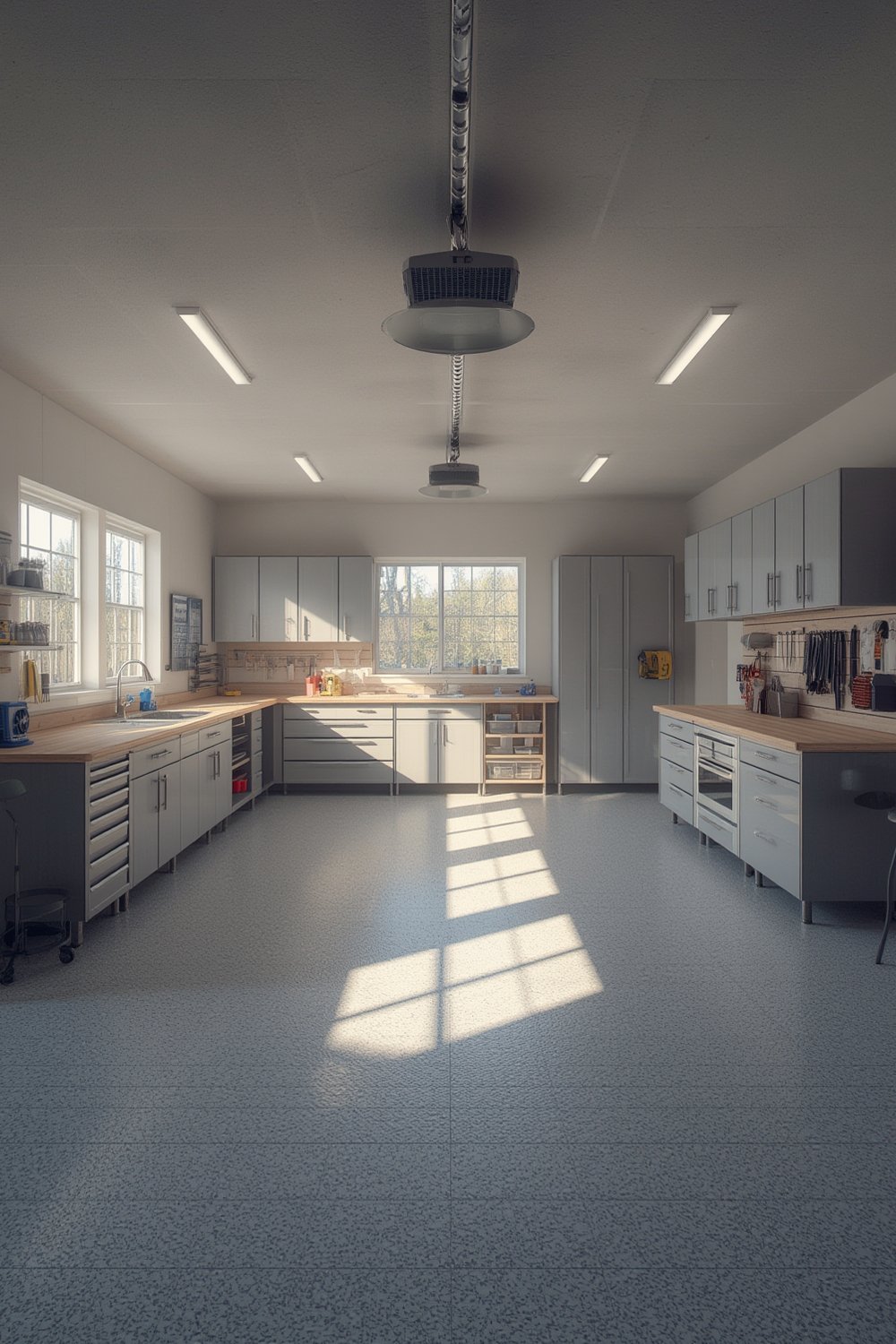
According to the U.S. Department of Energy’s 2024 LED adoption report, LEDs now make up nearly 30% of all indoor lighting, surging in garages and workshops for their massive energy savings, excellent visibility, and dramatically reduced maintenance. While commercial spaces lead the trend, home garages are catching up—especially as more people tackle ambitious DIY and home improvement projects.
Traditional incandescent or fluorescent tubes can’t match LED’s efficiency or color rendering. With modern LED shop lights, you get better color accuracy (measured by CRI), lower electricity bills, and longer replacement intervals. The result: less strain on your wallet and your eyes.
How to Upgrade Your Garage Workshop Lighting: A Step-by-Step Guide
Ready to ditch the single overhead bulb? Here’s how to plan and install effective, shadow-free lighting for your garage or workspace:
- Assess Your Needs: Measure your garage (length x width = square footage). Think about your primary activities: heavy-duty wrenching needs more light than simple storage or occasional woodworking.
- Choose Your Fixtures: Linear LED shop lights, high-lumen “deformable” ceiling lights, and motion-sensor lights are top choices for DIY garages. For general work, pick fixtures with at least 4000 lumens per 200-square-foot bay.
- Check Color Quality: Look for Color Rendering Index (CRI) 80+ and color temperature between 4000K (“cool white”) and 5000K (“daylight”) for clear, true-to-life visibility.
- Map Out the Layout: Place main overhead lights parallel to your primary workbench and in rows for wide garages. Space fixtures evenly, about every 4–6 feet, to eliminate dead spots and cross-shadows. Angle lights away from windows to reduce glare.
- Install and Test: Use plugged or hardwired fixtures based on your skill level. Most modern LED shop lights come with easy mounting kits. Turn off power at the breaker before you install. Test each section before fully securing.
- Fine-Tune for Shadows: Add supplemental wall-mounted or under-shelf LED strips for tricky corners and tool storage areas. Walk around and check for dark spots—adjust or add as needed.
- Upgrade for Future Use: If you plan to add a garage gym or office, consider dimmable fixtures and smart LED controls for variable brightness and energy savings. For climate control advice, see our Garage Gym Insulation Guide.
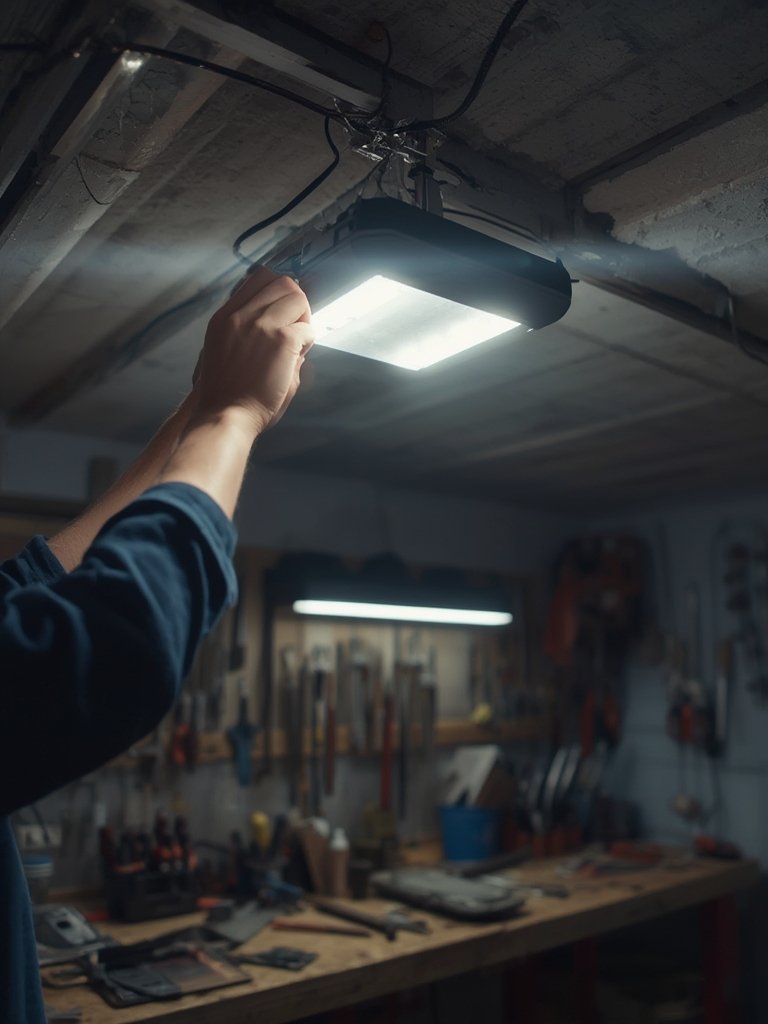
For budget-minded upgrades, check for Lowe’s Home Improvement in your area—their weekly deals on LEDs and installation accessories can save you a bundle. And if you’re building your own workspace from scratch, our Ultimate Home Improvement Tools Guide can help you pick the right gear for new lighting installs or re-wiring tasks safely.
Finally, don’t forget about energy savings: High-efficiency kits may cost more up front, but start cutting your power bill right away. For more ways to boost home efficiency, check out our Ultimate Home Improvement Ideas 2025 roundup.
Analysis, Problems & Common Pitfalls
No system is perfect. Upgrading garage workshop lighting can introduce some headaches and hidden costs if you don’t plan ahead. Here’s how major options actually compare, plus issues you’ll want to avoid:
| Feature | LED Shop Lights | Fluorescent Tubes | Incandescent Bulbs |
|---|---|---|---|
| Brightness (Lumens) | 2,500-10,000 per fixture | 1,800-5,000 per fixture | 800-1,600 per bulb |
| Average Lifespan | 30,000–50,000 hours | 7,000–15,000 hours | 800–2,000 hours |
| Energy Use | Least (12-50W) | Moderate (30-90W) | Highest (60-100W per bulb) |
| Color Rendering (CRI) | 80+ | 70-85 | 60-75 |
| Upfront Cost | Moderate to High | Low–Moderate | Low |
| Maintenance | Very low | Replace tubes and ballasts | Frequent bulb changes |
| Payback Period* | 1–3 years | Rarely pays back | N/A |
*Based on 2024 LED savings stats and common fixture replacement costs.
- Pitfall 1: Overestimating LED Coverage – Many DIYers buy “high lumen” lights but still leave dark spots, especially above benches or in corners.
- Pitfall 2: Color Fatigue – Cheap LEDs with low CRI cause duller colors and eye strain. Always check for CRI 80+.
- Pitfall 3: Poor Layout – Even the best lights will cast shadows if not positioned thoughtfully. Use multiple fixtures arranged parallel to your main work zones.
- Pitfall 4: Under-budgeting for the Upgrade – Energy-efficient lighting pays back, but quality LED shop lights cost more up front. Add a small buffer for extra wires, connectors or mounting hardware.
- Pitfall 5: Ignoring Smart Controls – Motion sensors and dimmers can save even more energy, but are rarely considered at first. Retrofit later, or choose compatible fixtures now.
For more guidance on maximizing workspace utility and efficiency, see our tips on Smart Home Upgrades and Best Home Furniture 2026 for organizing your space around your lighting setup.
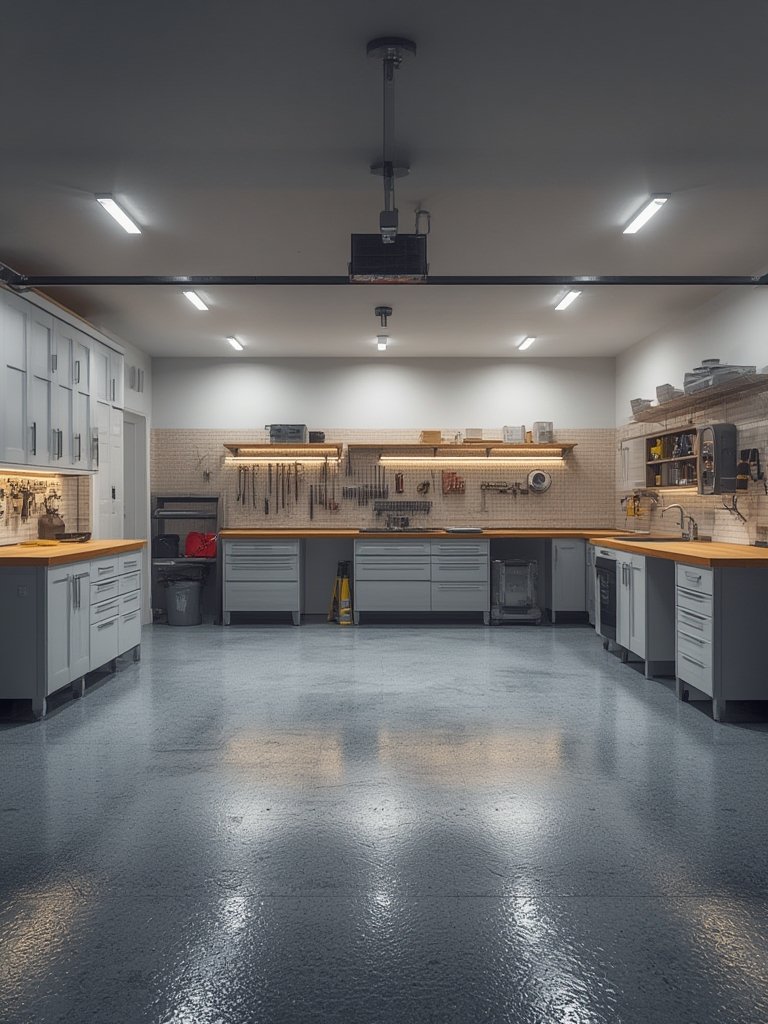
Research shows LEDs outperform older bulbs in efficiency, life and safety, but don’t skip a detailed plan or mistake lumens for actual useful light.
Conclusion
Thoughtful planning and the right technology can completely transform your garage workspace. LED shop lights deliver powerful, efficient, long-lasting illumination—but layout, color quality, and avoiding shadows are just as critical for optimal results. Upfront LED costs are higher, but lower power use and less maintenance mean most homeowners recover their investment in a couple of years.
Take action: Map your ideal lighting, invest in quality fixtures, and install for full workspace coverage. For more home improvement tips and technical guides—including garage workshop lighting upgrades and tool organization—explore our free resources or find your local Lowe’s store for deals and installation help.
FAQ
How many lumens do I need for basic garage workshop lighting?
For most one-car garages, aim for 4,000–8,000 total lumens. For larger or multi-bay workshops, target 50–75 lumens per square foot over work zones and benches.
What color temperature works best for garage tasks?
4000K (“cool white”) to 5000K (“daylight”) is best. Cooler light improves visual clarity for detailed tasks and reduces eye fatigue.
Are LED garage lights really worth the higher upfront cost?
Yes. LEDs cut electricity use by up to 60-70% over fluorescent or incandescent options and last for years. The payback period is often under 3 years for most homeowners.
How can I minimize shadows in my garage workspace?
Use multiple fixtures spaced evenly (every 4-6 feet) and supplement with wall or under-shelf LED strips. Avoid relying on a single overhead light.
What technical specs matter most for garage workshop lighting?
Look for high lumens (brightness), a CRI over 80 (color rendering), and the right color temperature (4000K-5000K). Dimmable and motion-sensor features are a plus for saving energy.