

home air quality monitor usage has surged as homeowners recognize the link between indoor air pollution and health risks, but choosing the right monitor is more complicated than it seems. With rising concerns about air quality at home, especially for families with children, seniors, or respiratory issues, knowing exactly how to monitor and improve your indoor air is essential.
Key Takeaways
- Indoor air quality directly impacts health, making a home air quality monitor a smart investment for wellness and prevention.
- Monitor accuracy, sensor type, and data privacy vary more than most buyers realize—compare features and brands carefully before purchasing.
- Upkeep, sensor calibration, and managing ongoing costs are often overlooked but critical for reliable performance.
- 1. The Core Concept: What Are Home Air Quality Monitors and Why Do You Need One?
- 2. Step-by-Step Guide: How to Select, Use, and Optimize a Home Air Quality Monitor
- 3. Advanced Analysis & Common Pitfalls
- 4. Conclusion
- 5. FAQ Section
The Core Concept: What Are Home Air Quality Monitors and Why Do You Need One?
Indoor air pollution is a leading but often invisible threat. According to the World Health Organization, household air pollution contributes to approximately 3.2 million deaths per year worldwide, including more than 237,000 children under five [source]. Common indoor pollutants such as particulate matter (PM2.5 and PM10), volatile organic compounds (VOCs), and carbon monoxide are associated with serious health outcomes—ranging from asthma and respiratory infections to cardiovascular disease, developmental delays, and cognitive impairment. Vulnerable groups, including children, seniors, and people with chronic conditions, are at even greater risk[source].

A home air quality monitor gives real-time, room-by-room detection of pollutants, helping you identify issues before they harm your family. This technology empowers better choices in ventilation, cleaning, and home upgrades. Some models even connect with smart home systems to automate air purifiers or send alerts when pollution spikes. Without a monitor, invisible threats like VOCs and carbon monoxide can go undetected, especially in energy-efficient homes with less natural airflow. Knowing what’s really in your air is the first step toward a healthier home.
This is especially relevant for homeowners considering renovations or installations—like adding new low VOC flooring or managing humidity with a basement dehumidifier. Pairing these improvements with air quality monitoring maximizes their benefit while avoiding unpleasant surprises.
Step-by-Step Guide: How to Select, Use, and Optimize a Home Air Quality Monitor
Getting the most from a home air quality monitor isn’t as simple as buying any device and plugging it in. Here’s a clear, no-nonsense process to guide you:
- Define your priorities. Do you want to track dust (PM2.5/PM10), VOCs, CO2, or allergens? Not all devices measure every pollutant. Consider your home’s risk profile—if you use gas appliances or have an attached garage, CO and VOC monitoring becomes more critical.
- Check sensor accuracy and data availability. Look for monitors with published independent lab certifications (for example, third-party accuracy data for PM2.5). Avoid “black box” brands that provide no details on their sensors.
- Consider the interface and data privacy. Some devices use apps requiring cloud accounts, while others work locally. Review privacy policies to know where— and how—your air quality data is stored or shared.
- Understand upfront and ongoing costs. Price isn’t just the box. Research costs for replacement sensors, filter packs, and any app subscription fees. Budget for these annual expenses up front to avoid unpleasant surprises.
- Install the monitor strategically. Plug in or mount the device at breathing level, away from vents, doors, and direct windows. If you routinely cook, place a unit in or near the kitchen. If you’ve recently installed a new garage door, monitor that space for CO leaks.
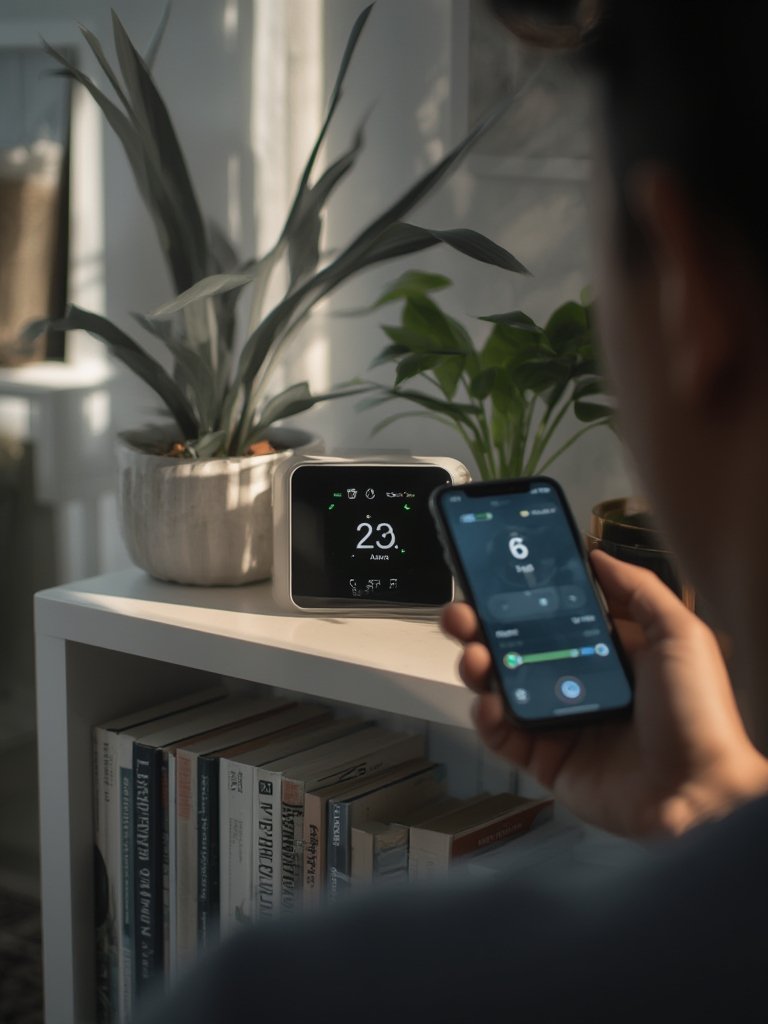
- Monitor air quality trends over time. Check readings throughout the day and compare trends week to week. Look for spikes from seasonal changes, renovations, or unusual activities (like cleaning, painting, or wildfires nearby).
- Take actionable steps based on data. If levels rise, use exhaust fans, open windows, upgrade to window insulation film to prevent outside infiltration, or run an air purifier. Track improvements with your monitor to see what really works.
- Develop a maintenance routine. Clean or replace sensors and update firmware as recommended. A “set-and-forget” approach leads to false readings and missed dangers.
This approach aligns well with other home optimization projects like adding a smart breaker panel or integrating a smart leak detector—aim for reliable, actionable data in every part of your living environment.
Advanced Analysis & Common Pitfalls
While the promise of a home air quality monitor is real, the process isn’t foolproof. Many buyers experience frustration from hidden shortcomings.
- Accuracy isn’t guaranteed. Some lower-cost models “estimate” pollutants using only basic sensor arrays instead of direct measurement, leading to misleading readings. Always check for independent accuracy testing—rare but essential, especially for PM2.5 sensors.
- Privacy concerns are real. Many WiFi-connected devices store detailed indoor environment data in the cloud, which can be shared with third parties. Privacy policies differ by brand, so look for transparent statements on data storage and sharing.
- Ongoing costs add up. Sensors degrade and filters saturate over time. While retail packaging rarely highlights the cost of replacement parts or annual app fees, you need to budget for both or risk a “dead” monitor after the first year.
- Placement matters more than most users think. Monitors near open windows or vents often underrepresent actual exposure in core living spaces. Rooms with low airflow or new furnishings deserve special attention.
- Usability varies wildly. Some apps are intuitive, others are clunky or require convoluted setup—especially when pairing with smart-home systems.
| Feature | Premium Monitor | Budget Model |
|---|---|---|
| Sensors Covered | PM2.5, CO2, VOCs, CO, Humidity, Temp | PM2.5 or VOC; often not both |
| Independent Certification | Usually published (look for AQ-SPEC or comparable) | Rarely, if ever |
| Cloud Data Privacy | Clear, often supports local-only mode | Often vague or not documented |
| Ongoing Maintenance Cost | Moderate (replace sensors every 1-2 years, $30-$80 annually) | Low at first, but sensor failure possible after year one |
| App Experience | Simple, alert-rich, integration ready | Basic visuals, few alerts |
Finally, it’s important to put your air quality monitoring strategy into context with other health-focused upgrades in your home. If you’re already planning improvements—such as smart renovations or a kitchen upgrade—plan for long-term monitoring and include sensor maintenance in your regular home care list.
Conclusion
Home air quality is a critical, often overlooked factor in maintaining optimal wellness. Investing in a home air quality monitor gives you the power to identify invisible threats, take practical steps, and track improvement—or uncover issues requiring swift intervention. Remember, success depends on careful selection, strategic setup, routine maintenance, and attention to costs and privacy. Start monitoring today for a healthier home tomorrow—and if you’re revamping or upgrading your space, consider integrating monitoring with other forward-thinking measures.
Ready to breathe easier at home? Choose the right air quality monitor, set it up thoughtfully, and get proactive with your indoor environment!
FAQ Section
What pollutants should my home air quality monitor detect?
The most relevant pollutants are PM2.5, VOCs, CO2, and carbon monoxide. Monitors measuring all four give the most comprehensive overview of indoor risks.
How often should I replace or calibrate the sensors?
Most sensors require replacement or calibration every 12 to 24 months. Always follow the manufacturer’s recommendations to maintain accuracy.
Are air quality monitors worth the investment for renters?
Yes. Portable models work for renters and can alert you to ventilation or hidden pollutant problems before they harm your health.
Will my monitor work if I have pets or use scented candles?
Air quality monitors will detect increased particulate and VOC levels from pets and scented products. These sources can reveal patterns or spikes in readings—helpful for adjusting habits or cleaning routines.
Is cloud data sharing required for all home air quality monitors?
No, but many models default to cloud storage. If privacy is a concern, seek monitors that offer local-only data options and transparent privacy policies.