

Soundproof ceiling panels are among the fastest, most effective ways to reduce noise transfer and improve room acoustics—if you choose and install them wisely. Whether you want quiet in an office, more privacy in your apartment, or a less noisy classroom, understanding how these panels work and their real-world performance is a must. Here’s what modern research reveals, what to expect, and how to install soundproof ceiling panels for genuine results.
Key Takeaways
- Modern soundproof ceiling panels offer high noise absorption, with NRC ratings of 0.70 to 0.95, but don’t guarantee complete silence.
- Material choice—mineral wool, gypsum, PET, or nanofiber—directly impacts sound performance, fire safety, and durability.
- Installations are doable for advanced DIYers, but ceiling work can be tricky; proper tools and planning matter as much as material selection.
- What Are Soundproof Ceiling Panels—and Why Use Them?
- How to Install Soundproof Ceiling Panels: Step-by-Step
- Advanced Analysis: Materials, Pitfalls, and What the Data Really Shows
- Conclusion
- FAQ: Soundproof Ceiling Panels
What Are Soundproof Ceiling Panels—and Why Use Them?
Soundproof ceiling panels are engineered boards installed on ceilings to absorb and diffuse sound waves, limiting echo, improving speech clarity, and blocking noise transfer between floors. They are popular in commercial settings like offices or auditoriums, but demand among homeowners is up—mainly due to open-concept spaces, work-from-home setups, and apartment living.
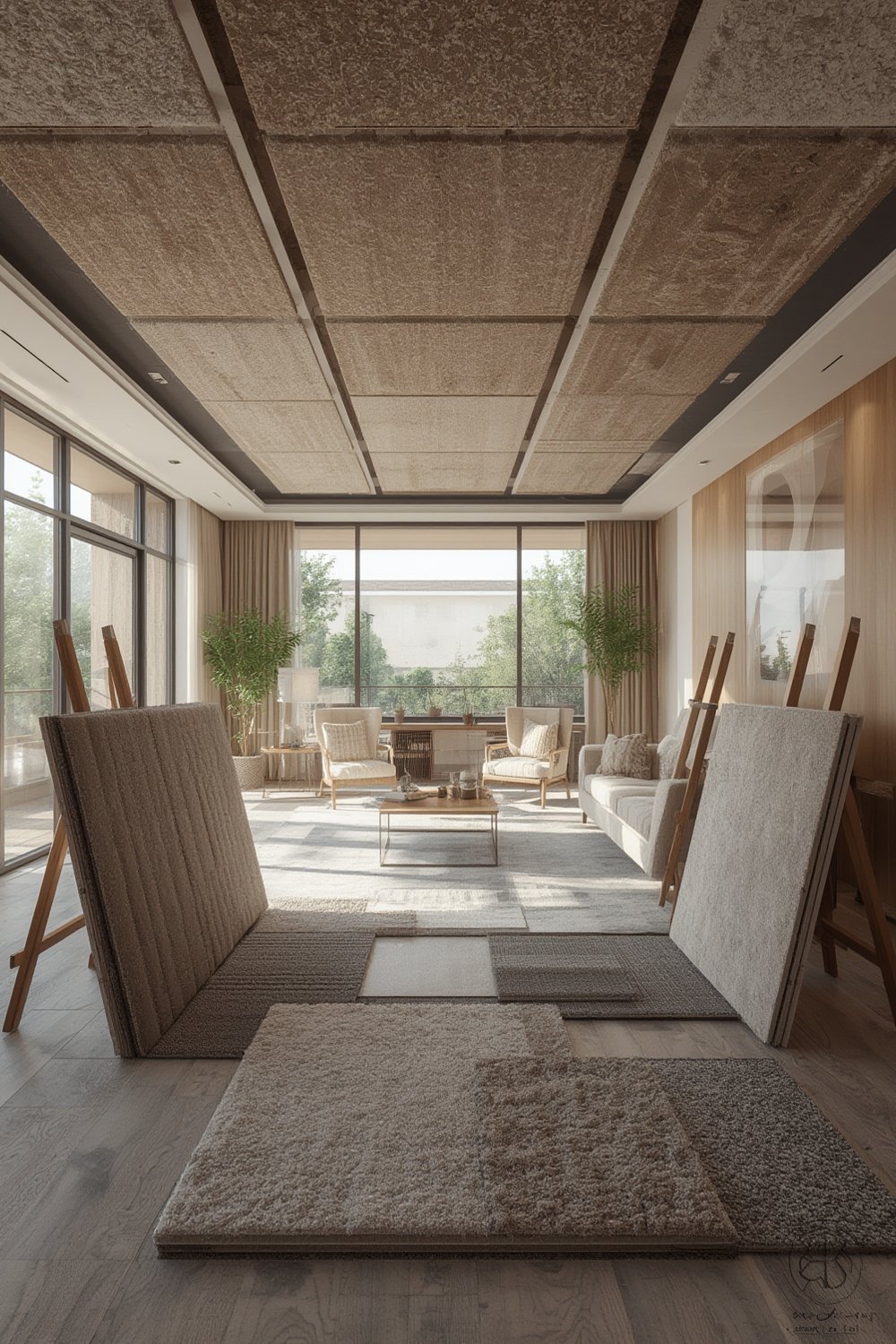
The appeal is simple: ceiling panels can be retrofitted with minimal disruption, and their effect is measurable. For instance, global data shows ceiling panels made up one-third of all acoustic installations in 2024, with NRC (Noise Reduction Coefficient) ratings that routinely reach 0.70 to 0.95. The higher the NRC, the more sound is absorbed. mineral wool and gypsum-based panels are the most common, but high-tech options like nanofiber composites are emerging for better performance with less weight (see source).
People are choosing these panels to:
- Reduce noise bleed in apartments, offices, and healthcare settings
- Improve speech privacy and cut echo in rooms with hard surfaces
- Comply with stricter building codes and safety standards for acoustic environments
Those interested in other soundproofing methods can compare with DIY soundproofing panel solutions for walls and home offices.
How to Install Soundproof Ceiling Panels: Step-by-Step
Installing ceiling panels is a project suited to advanced DIYers or professionals. Here’s a realistic step-by-step workflow based on best practices:
-
Plan and Measure Your Ceiling Area
Calculate your panel needs by multiplying the room’s length by width. Factor in light fixtures, ducts, or sprinklers. Allow for excess panels (10% overage) to accommodate cuts or errors.
For first-time installers: review the essential home improvement tools you’ll need—such as a stud finder, level, cutting tools, and safety gear. -
Choose the Right Panel Material
For most home offices or bedrooms, mineral wool or PET panels suffice. In spaces needing moisture resistance (bathrooms, basements), use PET or treated fiberglass. For commercial settings, check NRC and any applicable combustibility ratings.
Compare cutting-edge materials (like nanofiber layers) by reviewing installation guides and spec sheets, sometimes available direct from manufacturers (see data). -
Prep the Work Area
Clear furniture and protect surfaces. Use a stud finder for solid-mount installations; mark joists or furring strip locations. wear gloves and a mask if cutting mineral wool or fiberglass panels, as fibers can irritate skin and lungs. -
Install Mounting System or Grid
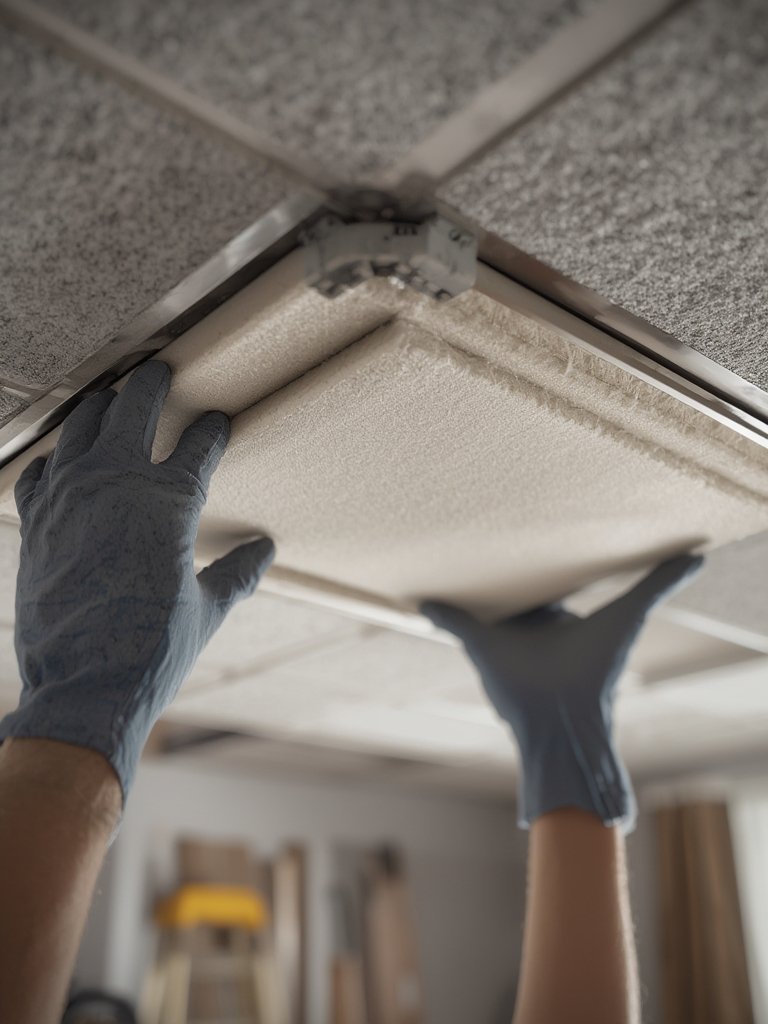
Decide on direct-mount or suspension grid systems. For drop-in panels, measure and square the main runners and cross tees, anchoring into joists or blocking. For direct-mount panels, adhere using clips, screws, or recommended adhesives.
If installing in tricky or tight spots, consider pre-cutting panels with a utility knife or saw for a snug fit. -
Place and Finish Panels
Align pattern lines where needed. Leave expansion gaps if required by manufacturer specs. Check for level with each panel. Complete the grid and safety-check all attachments before replacing fixtures. -
Inspect and Clean Up
Double-check that the panels are secure, no fibrous material is exposed, and all gaps are sealed. Clean up carefully; dispose of all offcuts and packaging.
Don’t forget: For heavy lifting or high ceilings, having a helper makes the process safer and much quicker. If you lack certain tools, local home improvement stores like Lowe’s offer tool rental and even installation services.
DIYers looking for more general home upgrade inspiration can find project ideas in this home improvement guide.
And for noise control that includes insulation, check practical attic and insulation upgrade advice that complements ceiling panel installs.
Advanced Analysis: Materials, Pitfalls, and What the Data Really Shows
Soundproof ceiling panel performance is strongly tied to material selection and installation quality—but there are limits and common mistakes the data exposes.
| Material Type | Key Property | Best For | Potential Downsides |
|---|---|---|---|
| Mineral Wool | High sound absorption, common in ceiling tiles | Bedrooms, offices, most homes | Can shed fibers if cut, needs careful install |
| Gypsum Panels | Sound absorbing, heavier, durable | Sound studios, commercial installs | Weight may need extra ceiling support |
| Perforated Wood | High diffusion, aesthetic warmth | Auditoriums, design-centric spaces | More for echo management than blocking transfer |
| PET or Fiberglass | Moisture/fire resistance, light, easy install | Healthcare, bathrooms, basements | PET can be pricier, fiberglass needs careful PPE use |
| Nanofiber/Plant Foam | Up to 14% higher absorption, 22% lower weight (trial phase) | Eco-friendly projects, innovation labs | Limited availability, cost unknown, still in trials |
Common Pitfalls and Limitations:
- No Decibel Guarantee: Most manufacturers list absorption (NRC), not true sound blocking (STC), so actual dB reduction for footsteps or voices is rarely disclosed. Marketing claims can be optimistic.
- Installation Quality Trumps Specs: Even top-rated panels lose effectiveness if poorly mounted, with gaps or loose contacts. Always follow best-practice guides or hire a pro if uncertain.
- Fire and Code Compliance: Panels must meet fire safety and VOC standards—especially crucial in legal rental or commercial setups. Check for required certifications before buying.
- Cost Data Gaps: While the global ceiling panel market value grew to $492 million in 2024, price per square meter, ROI, and payback period data isn’t publicly disclosed—budget carefully, and get multiple quotes.
- Variable DIY Difficulty: Ceiling grids and direct-mount panels can be a challenge for first-time DIYers—especially overhead, on uneven ceilings, or when working around fixtures. Many opt for professional installation for speed and code compliance. For basic tool requirements and safety tips, see our DIY tool guide.
Real-life performance varies based on the noise source (footsteps vs. voices vs. structure-borne sounds). There’s limited published measurement data for specific noises—so test small areas, and don’t expect miracles with a single panel layer. If you’re seeking all-around noise reduction—including under doors—check out dedicated products like acoustic door seals as a companion solution.

Conclusion
Soundproof ceiling panels work—especially for echo and airborne noise—but their performance depends on material, installation quality, and site conditions. NRC ratings give a good clue to effectiveness, but expect differences between product marketing claims and real-world noise reduction. For best results, combine ceiling panels with other measures (wall panels, door seals, insulation).
To maximize the value of your soundproof ceiling panels investment, plan your project, use the right tools, and budget for professional help if needed. Ready to make your spaces quieter? Start your soundproofing upgrade today with the products, guides, and acoustic panels for home that fit your needs.
FAQ: Soundproof Ceiling Panels
Are soundproof ceiling panels effective for blocking footsteps and impact noise?
Ceiling panels are best at absorbing airborne sound (like voices or echoes), but they have limited effect on blocking impact noise (like footsteps from above). For significant impact reduction, combine ceiling panels with cushioning upstairs or use resilient channel systems in the ceiling build-up.
Can I install soundproof ceiling panels myself?
It’s possible for skilled DIYers, especially with direct-mount or grid systems in small to medium rooms. However, ceiling work can be physically demanding and requires accurate measurement and safe lifting. For complex layouts or large jobs, a professional installer is recommended.
What safety standards should soundproof ceiling panels meet?
Look for panels with fire resistance certification and low VOC emissions. In commercial or rental settings, follow local building codes and ask the manufacturer for up-to-date safety test data and certifications.
How long do soundproof ceiling panels last?
Quality panels constructed from mineral wool, PET, or treated fiberglass can last 10-20 years or more with proper installation and indoor conditions. Moisture, improper mounting, or frequent removals can shorten lifespan.
How do ceiling panels compare to wall soundproofing?
Ceiling panels are generally more effective for controlling echo and noise from overhead than wall panels, but combining both yields the best overall results—especially in multi-level buildings or shared spaces.