

Under sink water filter systems have become the top choice for families who want powerful, truly reliable protection from lead, PFAS, and the most stubborn contaminants—without turning their kitchen into a science lab. Whether you’re worried about an old home’s pipes or simply want to stop buying bottled water, knowing how under sink water filters actually work, what’s worth your money, and the real issues you’ll face in 2024 is essential.
Key Takeaways
- Top under sink water filters in 2024 remove up to 100% of lead, but not all are certified for every contaminant. Certifications matter.
- Expect real-world issues like tight-fit installations, the need for regular filter replacement, and water flow trade-offs, especially with RO systems.
- Long-term costs for the best under sink water filters average $0.38–$1.65 per gallon including ongoing maintenance.
- What Is an Under Sink Water Filter and Why Use One?
- How to Choose and Install an Under Sink Water Filter (2024 Guide)
- Advanced Analysis & Common Pitfalls: What Goes Wrong
- Conclusion
- FAQs
What Is an Under Sink Water Filter and Why Use One?
An under sink water filter is a filtration system installed out of sight beneath your kitchen sink. Its main purpose is to remove health-threatening contaminants like lead, PFAS, chlorine, and microplastics—delivering safe, clean-tasting water straight from a dedicated faucet. In 2024, these systems are more popular than ever, especially for households concerned about aging infrastructure or uncertain city water quality.
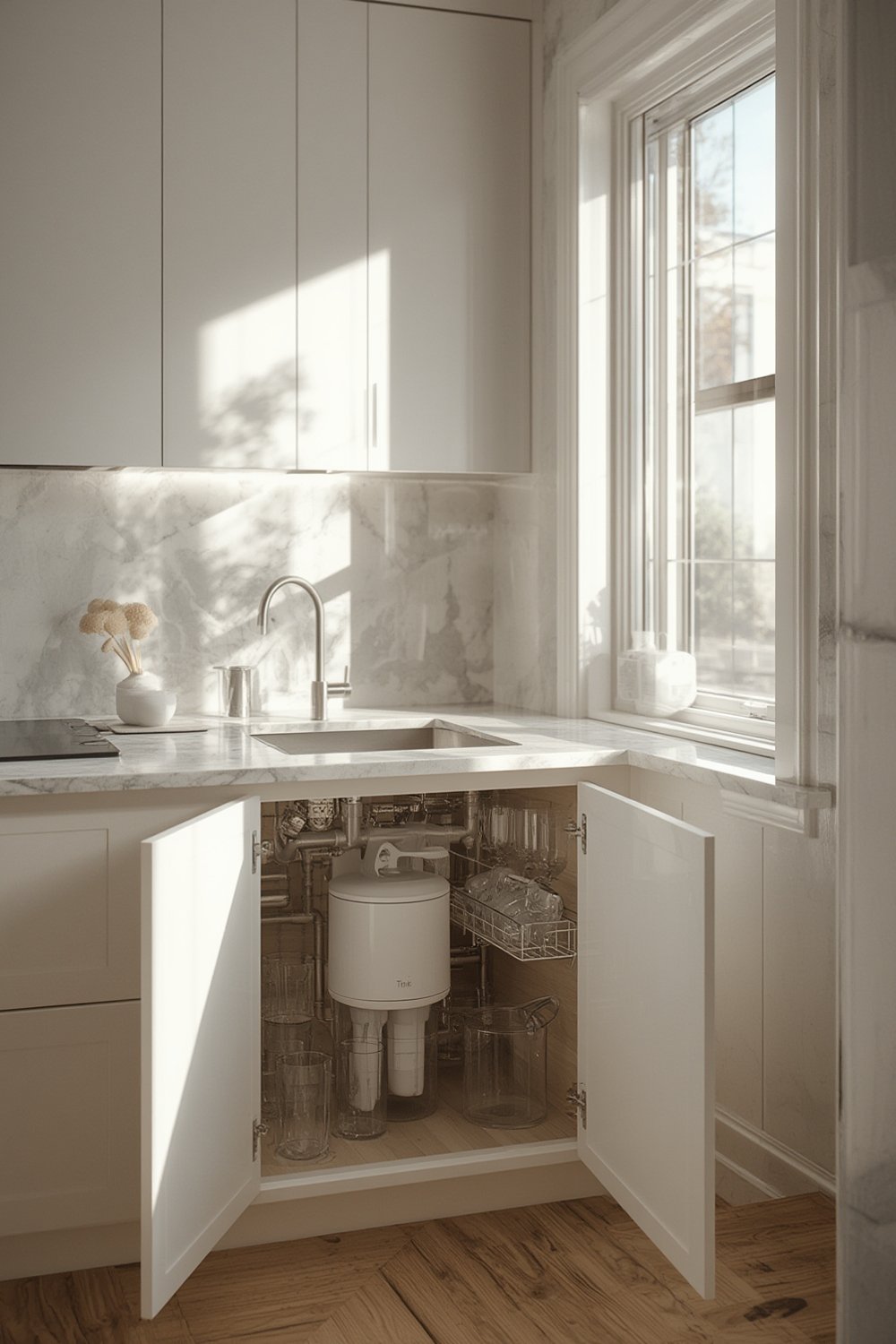
Why choose an under sink water filter?
- Powerful Protection: Leading models like the Waterdrop G3 P800 can eliminate up to 100% of lead, fluoride, arsenic, and other hazards according to independent lab results.
- Convenience: Once installed, you get filtered water whenever you turn on the tap—no more refilling pitchers, no countertop clutter.
- Targeted Filtration: Under sink filters treat only one or two faucets, maximizing effectiveness while minimizing waste and cost.
- Better Than Pitchers: Water pitcher filters rarely remove lead or PFAS to safe levels. Under sink systems with NSF 53 or 401 certification are the gold standard for true contaminant removal.
- Long-Term Value: Over five years, a quality under sink water filter is less expensive than bottled or delivered water, and requires less effort than countertop RO units.
How to Choose and Install an Under Sink Water Filter (2024 Guide)
Picking the right under sink water filter starts with knowing your water’s problems and your home’s setup. Here’s a step-by-step process any homeowner can follow:
-
Test Your Water
Use an EPA-certified lab or your city’s water quality report. Look specifically for lead, chlorine, and “emerging contaminants” like PFAS. If you rent, request this from your landlord or local utility. -
Decide Between RO and Carbon Block Systems
If your water has high lead (>15 ppb) or many contaminants, choose a reverse osmosis (RO) model like the Waterdrop G3 P800 or Aquasana SmartFlow® RO. For moderate issues, a carbon block + ion exchange filter like Aquasana Claryum® 2-Stage may suffice (both are certified for lead and PFAS). -
Check for Certification
Demand models with NSF/ANSI 53 (lead and health), 58 (for RO), 42 (chlorine), or 401 (for PFAS/pharmaceuticals). Certifications are not just marketing—they prove real performance. Cross-check all claims before buying. -
Validate Cabinet and Faucet Compatibility
Measure space under your sink, noting power outlets (for RO), pipe age, and faucet setup. Some under sink systems require drilling for a separate faucet and access to a drain line. -
Plan the Installation
- Gather tools like an adjustable wrench, tubing cutter, and Teflon tape. Our guide to essential home improvement tools covers the basics you’ll need.
- If your plumbing is old or corroded, consider hiring a pro or budgeting for new supply lines to prevent leaks.
-
Follow a Safe, Stepwise Install
Shut off water supply. Mount the filter cartridges as directed (usually on a wall or back panel). Install hoses, check for restrictions or kinks. Secure the filtered water line to either your main faucet (if compatible) or a new dedicated spout. -
Prime and Test the System
Flush the system per manufacturer’s instructions (usually 5–10 minutes) before using the water. Check all fittings for leaks. Tighten connections as needed, but avoid overtightening plastic threads to prevent cracking. -
Keep Track of Filter Lifespan
Prefilters usually last 6–12 months; RO membranes, 2–5 years. Most models have simple visual indicators but set a calendar or phone reminder. Running expired filters risks bacteria and outright failure.
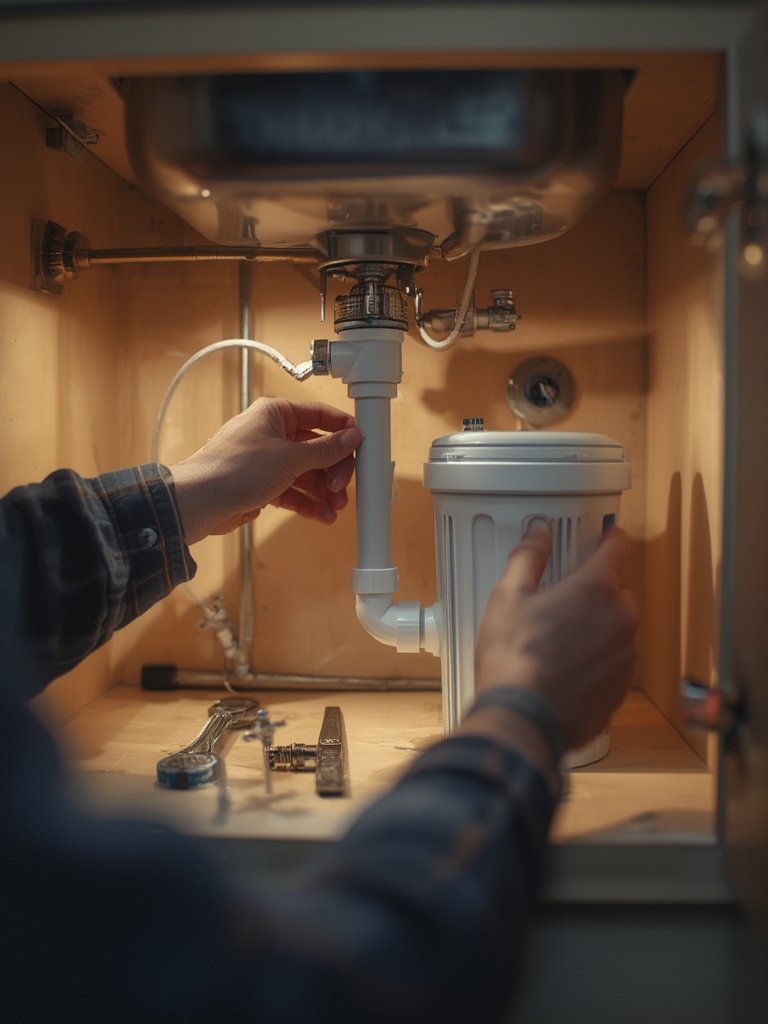
Maintenance is just as key as the initial install. Buy replacement filters compatible with your specific model, and dispose of old cartridges properly—some local programs accept these with hazardous waste.
For a thorough upgrade, pair your under sink filter with an energy efficiency project, such as an electric tankless water heater for the same cabinet space.
Advanced Analysis & Common Pitfalls: What Goes Wrong
Even the best under sink water filter can disappoint if you don’t know the risks. Let’s look at critical pain points and direct comparisons to countertop and whole-house units.
| System Type | Lead Removal Rate | Certifications | Install Difficulty | Annual Cost | Best Use Case |
|---|---|---|---|---|---|
| Under Sink RO (Waterdrop G3 P800) | 100% | IAPMO NSF 42/53/58* | High (drain/power req.) | $120–$300 | Max lead, PFAS, fluoride, high flow |
| Under Sink Carbon (Aquasana Claryum® 2-Stage) | 99.99% | NSF 42/53/401 | Moderate (no power/drain) | $120–$250 | Moderate lead/PFAS, lower waste |
| Countertop RO (AquaTru) | 100% | IAPMO NSF 53/42/58/401 | Easy (no install) | $120–$200 | Renters/small spaces |
| Whole-House (Kind E-3000) | 100% | IAPMO Lead | Complex (pro install) | $300–$600+ | Multi-tap/all home |
- Installation Headaches: Tankless RO models like the Waterdrop G3 P800 need more under-cabinet space and access to a power outlet, plus a drain connection. If your sink cabinet is cramped or you have a garbage disposal, expect a tight squeeze or extra plumbing work. Typical issues and solutions are covered in our Lowe’s store installation guide.
- Certified vs. Tested: Some brands claim 100% lead removal but lack official NSF 53 or equivalent certification for lead. Always check for official certification, not just test results.
- Filter Lifespan Surprises: Prefilters clog sooner with high-sediment water. Overdue filters can grow mold and bacteria, especially after vacation or extended non-use.
- Flow Rate Frustration: Non-RO carbon block systems can slow water to a trickle if pressure drops or filters are overdue.
- Faucet Compatibility Problems: Not all systems work well with modern pull-out or pull-down kitchen faucets. Some installations may void faucet warranties. Always verify before drilling or installing T-valves.
- Leaks in Old Pipes: Disturbing old copper, galvanized, or plastic lines increases leak risks. Tighten only as directed and replace fragile parts as needed.
- Wastewater Woes (RO): RO systems generate up to three gallons of waste for every filtered gallon. Some modern models, like Waterdrop G3 P800, are more efficient, but it’s an unavoidable byproduct. Non-RO carbon systems waste less, but remove fewer contaminants.
There’s currently no under sink water filter with true real-time digital monitoring of your water’s purity. You must rely on scheduled filter changes or basic mechanical indicators rather than live contaminant alerts.
Cost is also essential. Here’s a real-world breakdown of purchase and five-year costs, based on industry data:
| System Type | Upfront Cost | Annual Maintenance | Replacement Frequency | 5-Year Cost per Gallon |
|---|---|---|---|---|
| Multi-stage Carbon/Ion Exchange | $200–$500 | $120–$250 | 6–12 months | $0.44–$1.03 |
| RO w/ Tank | $200–$600 | $80–$200 | 6–12 mo. (prefilters), 2–5 yrs (membrane) | $0.38–$1.10 |
| Tankless RO | $350–$900+ | $120–$300 | 6–12 months | $0.64–$1.65 |
Note: Pro installation (especially for RO) may add $150–$300 in labor.
If you’re planning a major home refresh, consider efficiency upgrades like an easy DIY backsplash or soundproofing panels while you have the cabinetry open. This saves time and effort long-term.
Conclusion
The right under sink water filter will give your family consistently safe, clean-tasting water—and in 2024, the top models like Waterdrop G3 P800 and Aquasana Claryum® 2-Stage deliver up to 100% lead and contaminant removal when properly certified and maintained. Remember the downsides: careful installation, filter upkeep, and knowing the real limitations, like wastewater from RO or filter slowdown with carbon block units.
Ready to reclaim peace-of-mind at the tap? Choose a certified under sink water filter today and experience the difference with every glass. For more guidance on water, appliances, and home upgrades, explore our other essential guides like the Electric Tankless Water Heater Guide or our Best Home Furniture Guide.
FAQs
Which certifications matter most for lead and PFAS removal?
NSF/ANSI 53 certification is critical for lead and health-risk contaminant removal. For PFAS and pharmaceuticals, look for NSF/ANSI 401. Reverse osmosis systems should also have NSF 58 for total dissolved solids. Certifications by IAPMO are considered equivalent.
How often should I change my under sink water filter?
Prefilters typically last 6–12 months, while RO membranes last 2–5 years. High-usage households or those with more sediment may need more frequent changes. Always follow manufacturer guidance and monitor for reduced flow or taste changes.
Are all under sink filters equally effective against lead?
No. Some claim high removal rates but are not NSF 53 certified for lead. Double-check certification and match your system to your water’s actual test results. For very high lead, a tankless RO system is best.
What’s the biggest installation challenge I might face?
For RO systems, providing a drain connection in a cramped cabinet space is often problematic, especially if you have a garbage disposal or limited access. Planning ahead and measuring carefully prevents headaches.
Do any under sink water filters offer real-time monitoring of water quality?
No under sink models on the mainstream 2024 market offer true digital real-time contaminant monitoring. Maintenance relies on scheduled filter changes, visual indicators, and taste/odor checks.